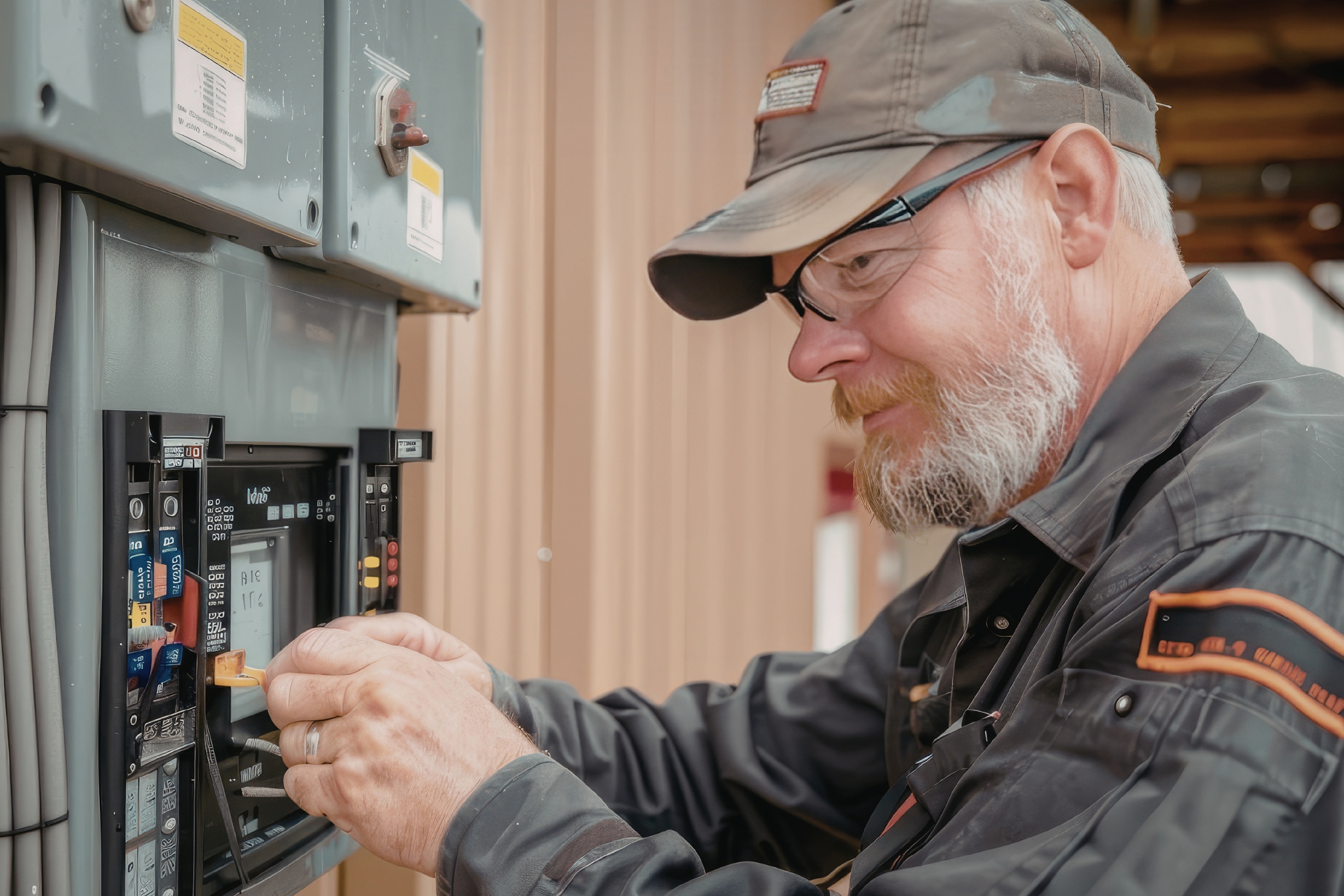
The Benefits Of Hiring Electricians
Electricity is the invisible backbone of modern life — powering everything from the lights overhead and the devices on every desk to the heating systems, security infrastructure, and appliances that define the comfort and functionality of every home and workplace. Yet despite its critical importance, electrical work is one of the areas where the temptation to cut corners — through DIY attempts, unqualified tradespeople, or simply deferring necessary work — is most persistent and most consequential. The benefits of hiring a professional electrician extend far beyond the completion of a specific task. They encompass safety assurance, regulatory compliance, financial protection, long-term reliability, and the kind of peace of mind that comes from knowing the most critical system in any building has been handled by someone with the training, qualifications, and accountability to get it genuinely right. This guide makes the complete case for professional electrical services — covering every dimension of value that a qualified electrician brings to any project, large or small, residential or commercial.
Safety Above Everything Else: Why Qualifications Are Non-Negotiable
The most fundamental and most important benefit of hiring a qualified electrician is safety — and it is a benefit whose value cannot be overstated in a field where the consequences of poor workmanship are measured not just in inconvenience or financial loss but in fire, injury, and death. Electrical installations that are incorrectly designed, improperly executed, or completed without appropriate testing and verification create hazards that may remain dormant and invisible for months or years before manifesting catastrophically. The qualified electrician is the professional whose training, testing regime, and ongoing regulatory obligations specifically exist to prevent this outcome.
A qualified electrician brings a depth of technical knowledge about electrical safety principles that goes well beyond the practical mechanics of connecting wires correctly. Understanding the principles of fault current protection — why the right combination of circuit breaker rating and cable size matters for the prevention of overheating under fault conditions — requires the kind of systematic training that no amount of online tutorial watching or prior DIY experience can replicate. Understanding how residual current devices protect against the specific type of electrical fault most likely to cause electrocution — a small leakage current through a person to earth — and why their correct installation, testing, and maintenance is a life-safety matter rather than an optional extra is knowledge that a qualified electrician applies routinely and that an unqualified person attempting similar work typically lacks entirely.
The testing and inspection regime that a qualified electrician applies after completing any electrical installation is a critical safety component that is entirely absent from DIY or unqualified work — and its absence is one of the most dangerous gaps between professional and non-professional electrical work. After completing an installation, a qualified electrician uses specialized test instruments to verify that protective devices will operate correctly under fault conditions, that insulation resistance meets the required standard, that all earthing connections are secure and effective, and that the completed installation performs within the parameters defined by the current wiring regulations. This systematic testing catches the installation errors that are not immediately visible — the connection with marginally insufficient torque that will eventually arc, the cable with insulation damage that will eventually fail — before they produce consequences rather than after. It is the difference between a completed electrical job and a verified safe electrical job.
Regulatory Compliance and the Legal Framework of Electrical Work
Hiring a qualified electrician is not just a safety decision — it is a legal and regulatory necessity for most categories of electrical work in domestic and commercial buildings. Understanding the regulatory framework that governs electrical work helps property owners appreciate why this requirement exists, what it protects them from, and what the specific consequences of non-compliant electrical work are in practice.
In the United Kingdom, the regulatory framework for domestic electrical work is primarily established through Part P of the Building Regulations and the current edition of BS 7671 — the national standard for electrical installations commonly known as the IET Wiring Regulations. Part P specifies which categories of electrical work in domestic premises are notifiable — meaning they require either completion by a registered competent person who self-certifies their work to the local authority, or notification to building control for inspection and certification before the work is covered up and the installation is brought into use. The registered competent person schemes — NICEIC, NAPIT, Elecsa, and others — provide the registration framework within which qualified electricians demonstrate and maintain the competence required to self-certify their work under Part P.
The consequences of non-compliant electrical work extend across multiple dimensions that directly affect the property owner’s financial interests. Buildings insurance policies almost universally require that electrical work affecting the insured property is completed in compliance with applicable regulations — meaning an insurance claim arising from an electrical fault traced to non-compliant work can be rejected or significantly reduced, leaving the property owner bearing the remediation costs personally. At the point of any property sale, the conveyancing process requires disclosure of electrical work and the provision of certificates confirming compliance — non-compliant or uncertified work creates a disclosure obligation that can delay or complicate a sale, reduce the achievable price, or require expensive retrospective certification by a qualified electrician who must first assess and potentially remediate the non-compliant work before it can be signed off. The cost of a qualified electrician completing compliant, certified work is a fraction of these potential consequences — a financial comparison that becomes starkly clear to property owners who discover the regulatory implications of past non-compliant work at the worst possible moment.
Quality of Workmanship and Long-Term Reliability
Beyond safety and compliance, the practical quality of work produced by a qualified and experienced electrician delivers long-term reliability benefits that the apparent short-term savings of cheaper, less qualified alternatives consistently fail to deliver. Electrical installations that are completed to a high standard of workmanship — with correctly sized cables properly supported and protected, connections made with appropriate torque and correct technique, consumer units laid out logically with clearly labeled circuits, and all work completed with the finish quality that a professional takes pride in — perform more reliably, require less remedial attention, and have longer operational lifespans than installations produced to a lower standard of care.
The practical implications of quality workmanship in electrical installations are most visible over time rather than immediately after completion. A connection made with correct torque will not loosen progressively under the thermal cycling of load and no-load conditions — a loosening connection that does will eventually arc, generating heat and potentially igniting surrounding materials. Cable runs that are correctly supported at the required intervals will not sag, shift, or experience mechanical stress at fixings that can eventually damage insulation. Consumer unit installations with circuits clearly and accurately labeled allow occupants to identify and isolate specific circuits quickly in an emergency — a safety-critical capability that poorly organized consumer units with illegible or inaccurate labeling consistently fail to provide when it matters most.
A qualified electrician’s investment in the quality of their work also reflects in how subsequent electrical work on the same installation is approached. An electrician attending a property to add circuits, modify existing installations, or investigate a fault in a well-executed previous installation has a clear, logical, and professionally organized system to work with — one whose cable routing, circuit design, and documentation make the additional work faster, safer, and more reliable than the equivalent work on a poorly executed installation whose history, layout, and condition are unknown and unpredictable. The quality of the original electrical installation is the foundation on which every subsequent electrical interaction with the property builds — and the investment in getting that foundation right from the outset pays dividends across the entire life of the building.
Financial Value: Why Hiring an Electrician Is the Economically Sound Choice
The perception that hiring a qualified electrician is an expensive option relative to DIY or unqualified alternatives is one that consistently proves inaccurate when the full financial picture is examined rather than just the upfront labor cost comparison. The true financial value of professional electrical services emerges from a comprehensive view that accounts for the costs avoided as well as the costs incurred — and that comprehensive view almost invariably favors the professional option by a margin that the upfront comparison fails to reveal.
The most direct financial benefit of hiring a qualified electrician is the prevention of electrical failures that generate repair and remediation costs far exceeding the original installation cost. A correctly designed and installed electrical circuit does not trip nuisance faults, does not require repeated call-out visits to investigate intermittent problems, and does not develop the progressive failures that poorly executed installations develop as substandard connections, undersized cables, and incorrect protection devices reach the limits of their tolerance. The cumulative cost of the call-outs, investigations, and remedial work that a poor initial installation generates over its lifetime consistently exceeds the cost premium of a quality installation by a multiple — making the qualified electrician’s higher upfront cost a genuine long-term financial saving rather than an expense.
Energy efficiency improvements represent an increasingly significant financial benefit of professional electrical engagement that is separate from the direct installation cost comparison. A qualified electrician advising on LED lighting retrofits, smart lighting controls, electric vehicle charging infrastructure, solar photovoltaic system integration, and heat pump electrical supply requirements brings technical knowledge that translates directly into reduced energy consumption and lower utility bills over the operational life of the installed systems. The financial return on well-executed energy efficiency electrical work — measured against the ongoing energy cost savings it generates — frequently delivers a payback period of only a few years on the installation investment, making it one of the most financially compelling categories of professional electrical service available to homeowners and business operators seeking to reduce their operating costs in a sustained and meaningful way.
The Professional Relationship That Grows in Value Over Time
One of the most underappreciated benefits of hiring a qualified electrician — particularly for homeowners and business operators who build a long-term relationship with a specific professional or firm — is the compounding value that familiarity with a specific property creates over time. An electrician who has worked on a property multiple times develops an understanding of its electrical installation that makes every subsequent engagement faster, more accurate, and more reliably effective than an equivalent engagement by an unfamiliar professional starting from scratch.
This accumulated property knowledge has immediate practical value in fault-finding situations — where an electrician who knows the history of an installation, the specific quirks of its circuit layout, the locations of concealed junction boxes, and the areas of previous modification can diagnose and resolve faults significantly faster than one approaching the same property cold. In a trade services context where hourly labor rates mean that diagnostic time has direct financial cost to the property owner, the efficiency advantage of the familiar electrician translates directly into lower fault resolution costs alongside better diagnostic accuracy. For commercial properties where electrical downtime has an operational and financial impact beyond the direct cost of the repair, this efficiency advantage is even more commercially significant.
A trusted long-term electrician relationship also provides the proactive advisory value that reactive one-off engagements cannot deliver. An electrician who attends a property regularly for maintenance, testing, and minor additions develops an informed perspective on the installation’s overall condition and trajectory — identifying developing issues, recommending timely upgrades before components reach failure, and advising on the electrical infrastructure investment that best serves the property’s evolving needs. This advisory relationship transforms the electrician from a reactive problem-solver into a proactive building advisor whose knowledge of the specific property and genuine interest in its long-term electrical health creates a service quality that one-off contractor relationships structurally cannot match. For property owners who value the confidence of knowing that their electrical installation is in consistently capable and genuinely invested professional hands, this ongoing relationship is ultimately the most enduring benefit that hiring a qualified electrician delivers.
Conclusion
The benefits of hiring a qualified electrician are broader, deeper, and more financially significant than the straightforward comparison of professional fees against DIY costs suggests. Safety assurance grounded in genuine technical training and systematic testing, regulatory compliance that protects insurance coverage and property transaction value, quality of workmanship that delivers long-term reliability rather than short-term completion, financial value that accumulates through prevented failures and energy efficiency gains, and the compounding professional relationship that grows in insight and effectiveness over time — these are the interlocking benefits that make professional electrical services one of the most genuinely valuable investments available to any homeowner or business operator. In a field where the consequences of substandard work range from inconvenient to catastrophic, and where the regulatory framework exists specifically to protect people from those consequences, choosing a qualified electrician is not the cautious option or the expensive option. It is simply the right one — and the full picture of what that choice delivers makes that conclusion impossible to argue with.