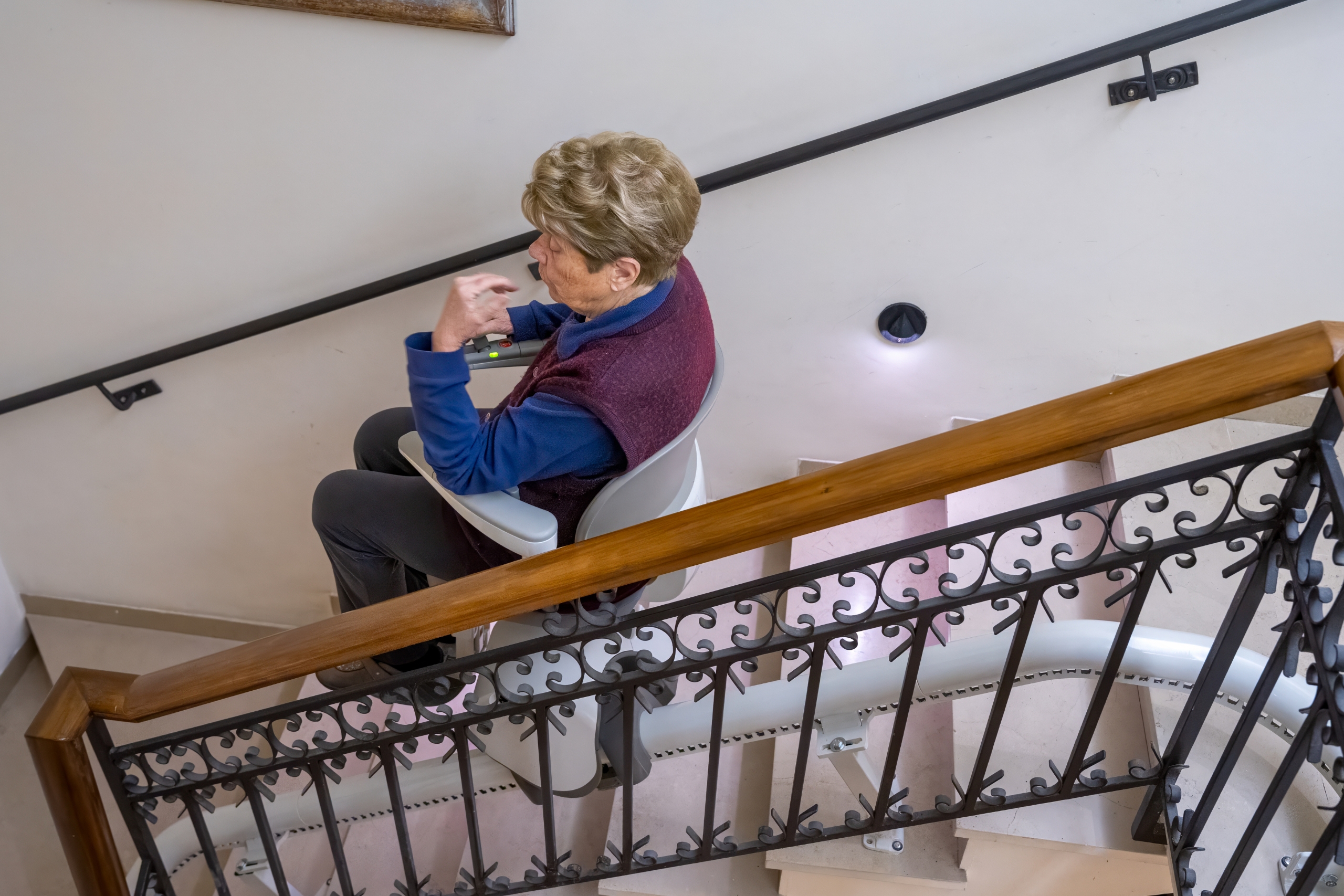
Installing A Stair Lift At Home
For many households across the country, a stair lift is not a luxury — it is the single most practical and most life-changing home modification available to a family member whose mobility has been affected by age, injury, or a long-term health condition. The ability to move independently between floors of a home that has been lived in for decades, that holds deep personal significance, and that represents the preferred alternative to a care facility or a major relocation is something that a well-chosen and properly installed stair lift can preserve with a reliability and dignity that few other solutions match. But the process of selecting, purchasing, and having a stair lift installed involves a set of decisions — about staircase type, drive mechanism, safety features, supplier credibility, and ongoing maintenance — that most families encounter with very little prior knowledge and under the time pressure of a declining mobility situation. This guide covers every essential aspect of home stair lift installation clearly and honestly, so every decision along the way is made with confidence and full understanding.
Understanding the Different Types of Stair Lifts Available
The stair lift market offers a range of product types designed to serve different staircase configurations and user needs — and the first and most fundamental decision in any stair lift purchase is identifying which type is appropriate for the specific staircase in the home where the lift will be installed. Getting this right from the outset prevents the frustration and expense of purchasing a product that is unsuitable for the physical reality of the installation environment.
Straight stair lifts are the most common, most straightforward, and most cost-effective category — designed for staircases that run in a single uninterrupted straight line from bottom to top without any bends, curves, or intermediate landings. If the staircase in a home is straight, the installation process is relatively quick and the product options are plentiful and competitively priced. The rail for a straight stair lift is manufactured to a standard length that is cut to suit the specific staircase measurement at the time of installation, making the product relatively simple to produce and supply compared to the bespoke manufacturing required for curved installations.
Curved stair lifts are engineered to follow staircases that incorporate bends, turns, intermediate landings, or spiral sections — configurations that are common in period properties, split-level homes, and houses with staircases designed around the architectural character of the building rather than functional simplicity. A curved stair lift rail is manufactured specifically to the exact geometry of the individual staircase — measured precisely and produced as a bespoke component that fits only that particular installation. This bespoke manufacturing process makes curved stair lifts significantly more expensive than straight equivalents, with lead times that reflect the production complexity involved. Perch lifts — which position the user in a partially standing, leaning posture rather than a fully seated one — are a specialist option suited to users whose hip or knee conditions make the seated position difficult, or to staircases that are too narrow to accommodate the footprint of a standard seated lift. Outdoor stair lifts, built with weather-resistant components and materials suitable for external installation, serve garden steps, decked access routes, or external staircases that present the same mobility challenge as internal ones.
Key Features and Technology to Look For in a Modern Stair Lift
Modern stair lifts are considerably more sophisticated pieces of domestic technology than their functional purpose might initially suggest — incorporating electronic controls, sensor systems, safety mechanisms, and power management features that collectively determine the reliability, safety, and ease of daily use that any installation delivers over its operational life. Understanding the key features available across the product range helps prospective buyers assess what they genuinely need versus what represents useful additional capability and what constitutes unnecessary complexity.
The drive mechanism — the system that powers the chair’s movement along the rail — is the core technological component of any stair lift and the one with the greatest impact on ride quality and long-term reliability. Rack and pinion drive systems, where a toothed gear engages with a rack fixed along the rail, are the most widely used mechanism in the industry — delivering smooth, consistent movement with minimal vibration and a proven long-term reliability record across millions of installations worldwide. The motor powering this mechanism is typically driven by rechargeable batteries rather than direct mains power, which provides the significant practical benefit of continued operation during a power outage — a safety consideration that is particularly important for users whose mobility is limited enough to make being stranded on a staircase a genuine welfare concern.
Safety sensors built into the footrest and the carriage of the stair lift detect obstructions in the path of travel — a child, a pet, a bag left on the stairs — and halt movement immediately to prevent collision or injury. Swivel seats that rotate to allow the user to mount and dismount facing away from the staircase — rather than toward it — eliminate the requirement to step sideways onto a staircase tread at height, which is one of the most significant fall risks in the transfer process. Adjustable seat height, armrest width, and footrest position accommodate the specific physical dimensions and comfort requirements of individual users rather than applying a one-size-fits-all configuration that may not suit the person actually using the lift daily. Remote controls — both handheld and fixed at the top and bottom of the staircase — allow the chair to be called and sent independently of the user’s physical position, which is particularly useful in households where two people need to share access to the staircase without the lift blocking the path.
The Installation Process: What to Expect From Start to Finish
Understanding what the stair lift installation process involves — from the initial home survey through to the post-installation demonstration and handover — helps prospective buyers manage their expectations, prepare their home appropriately, and evaluate the quality of the service they receive against the standard that a professional installation should meet. A well-executed installation by a competent and properly trained engineer is typically completed within a single day for straight stair lifts, with curved installations occasionally requiring a second day depending on rail complexity and site conditions.
The process begins with a home survey conducted by a representative of the chosen supplier — either in person or, increasingly, through a combination of remote measurement tools and video consultation. During this survey, the staircase is measured precisely, the condition of the staircase structure is assessed to confirm it is suitable for rail fixation, the available power supply near the staircase is noted, and the user’s specific physical requirements and preferences are discussed to inform product selection and configuration choices. For curved stair lifts, the accuracy of this survey measurement is critical to the precision of the bespoke rail manufacture — and any supplier that offers to complete a curved stair lift order without a physical in-home survey should be regarded with significant caution.
The installation itself involves fixing the rail to the staircase treads — not to the wall, which is a common misconception — using brackets that distribute the load across multiple treads without requiring any structural wall modification. This fixing method means that the installation leaves no permanent marks on the wall and that the lift can be removed and the brackets taken out if the household’s circumstances change in the future, leaving the staircase in essentially its original condition. The engineer connects the power supply, fits and tests all safety sensors and controls, sets the travel limits at both ends of the rail, and runs the lift through a complete functional test before demonstrating its operation to the user and any family members or carers who will be supporting them. A properly conducted handover includes practical instruction on mounting and dismounting safely, operating both the seat controls and the remote controls, understanding the battery charging indicator, and knowing what to do if the lift stops mid-travel.
Choosing a Reputable Supplier and Understanding the Costs Involved
The stair lift industry, like many home adaptation sectors, contains a wide spectrum of supplier quality — from established, nationally recognized manufacturers with decades of product development and installation experience to smaller resellers whose after-sales support and technical capability may be significantly less reliable. Choosing the right supplier is a decision with long-term consequences because a stair lift is a piece of equipment that will be depended upon daily, whose servicing and repair needs will arise over its operational life, and whose safe operation cannot be compromised by the commercial failure or poor service standards of the company that installed it.
Membership of recognized industry bodies provides an initial quality signal worth checking. In the United Kingdom, the British Healthcare Trades Association maintains a membership register of home adaptation suppliers who have met defined quality and ethical trading standards — a useful starting point for identifying reputable operators. The Equality Act and the Building Regulations do not specifically require stair lift installers to hold individual trade certifications in the way that gas or electrical work is regulated, but suppliers whose installation engineers hold relevant electrical competency certifications and who carry full public liability insurance provide a measurable baseline assurance of professional standards. Checking online reviews on Google, Trustpilot, and consumer advice platforms — paying particular attention to post-installation service reviews rather than just initial purchase reviews — reveals how a supplier performs across the full lifecycle of the customer relationship rather than only at the point of sale.
Cost varies significantly depending on product type, specification, and supplier. Straight stair lifts for standard residential staircases typically range from approximately one thousand to three thousand pounds for supply and installation from a reputable UK supplier, with the variation reflecting seat specification, additional features, and the length of the staircase. Curved stair lifts command a significantly higher price — typically ranging from three thousand to over ten thousand pounds — reflecting the bespoke rail manufacturing costs involved. Reconditioned stair lifts, offered by several reputable suppliers as a cost-reduced alternative to new equipment, represent a genuine value option for households with budget constraints provided the equipment has been properly refurbished, tested, and warrantied to a standard equivalent to that applied to new product. Funding support through local authority grants, Disabled Facilities Grants in England and Wales, and charitable organization assistance schemes is available to eligible households — and a reputable supplier should be knowledgeable about these funding routes and proactive in helping customers explore their eligibility before assuming the full cost must be met privately.
Maintenance, Servicing, and Long-Term Reliability
A stair lift that is used daily by a person whose mobility depends on it is a piece of safety-critical domestic equipment — and its long-term reliable performance depends on a maintenance and servicing regime that is as consistently applied as the regime for any other critical home system. The decision about how to manage ongoing servicing should be made at the time of purchase rather than deferred until the first fault occurs, because emergency repair call-outs are consistently more expensive and more disruptive than preventative maintenance conducted on a planned schedule.
Annual servicing by a qualified engineer — either through the purchasing supplier’s own servicing operation or through an independent stair lift servicing company — covers the inspection and adjustment of all mechanical components, lubrication of the rail and drive mechanism, testing of all safety sensors and limit switches, battery condition assessment and replacement where required, and a complete functional test of all controls and safety features. This annual inspection catches developing issues before they produce operational failures, extends the working life of the equipment, and provides the documented maintenance record that warranty claims and any insurance-related assessments may require. Many suppliers offer service contracts at the time of purchase that bundle this annual servicing with a defined level of priority response for any mid-year faults — an arrangement that provides predictable maintenance costs and guaranteed response times that one-off call-out arrangements cannot match.
The role of technology in modern stair lift reliability deserves specific acknowledgment. Contemporary stair lift models incorporate self-diagnostic systems that detect and report developing mechanical or electrical issues before they cause operational failure — alerting the user through indicator lights or digital displays to conditions that warrant a service call before they escalate to a breakdown. Some manufacturers now offer remote diagnostic connectivity that allows their service teams to assess equipment status and identify fault codes without requiring a physical engineer visit for every reported issue — reducing response times for resolvable faults and ensuring that physical visits are dispatched only when genuinely necessary. These technological advances in predictive maintenance represent a genuine quality-of-life benefit for users whose dependence on their stair lift makes unexpected downtime a significant welfare concern rather than a minor inconvenience.
Conclusion
Installing a stair lift at home is one of the most impactful and most practically meaningful investments a household can make in the independence, safety, and quality of life of a family member whose mobility has been affected by age, injury, or long-term health conditions. The decisions involved — from choosing the right product type for the specific staircase configuration and selecting the features that best serve the individual user’s needs, to choosing a reputable and well-supported supplier, understanding the full cost landscape including available funding support, and establishing a maintenance regime that protects the equipment’s long-term reliability — are all navigable with the right information and the right framework for evaluation. The technology underpinning modern stair lifts is mature, well-proven, and continuously improving in its safety, comfort, and diagnostic capability — making a professionally installed and properly maintained stair lift one of the most reliable and most transformative pieces of assistive technology available to any home that needs it.