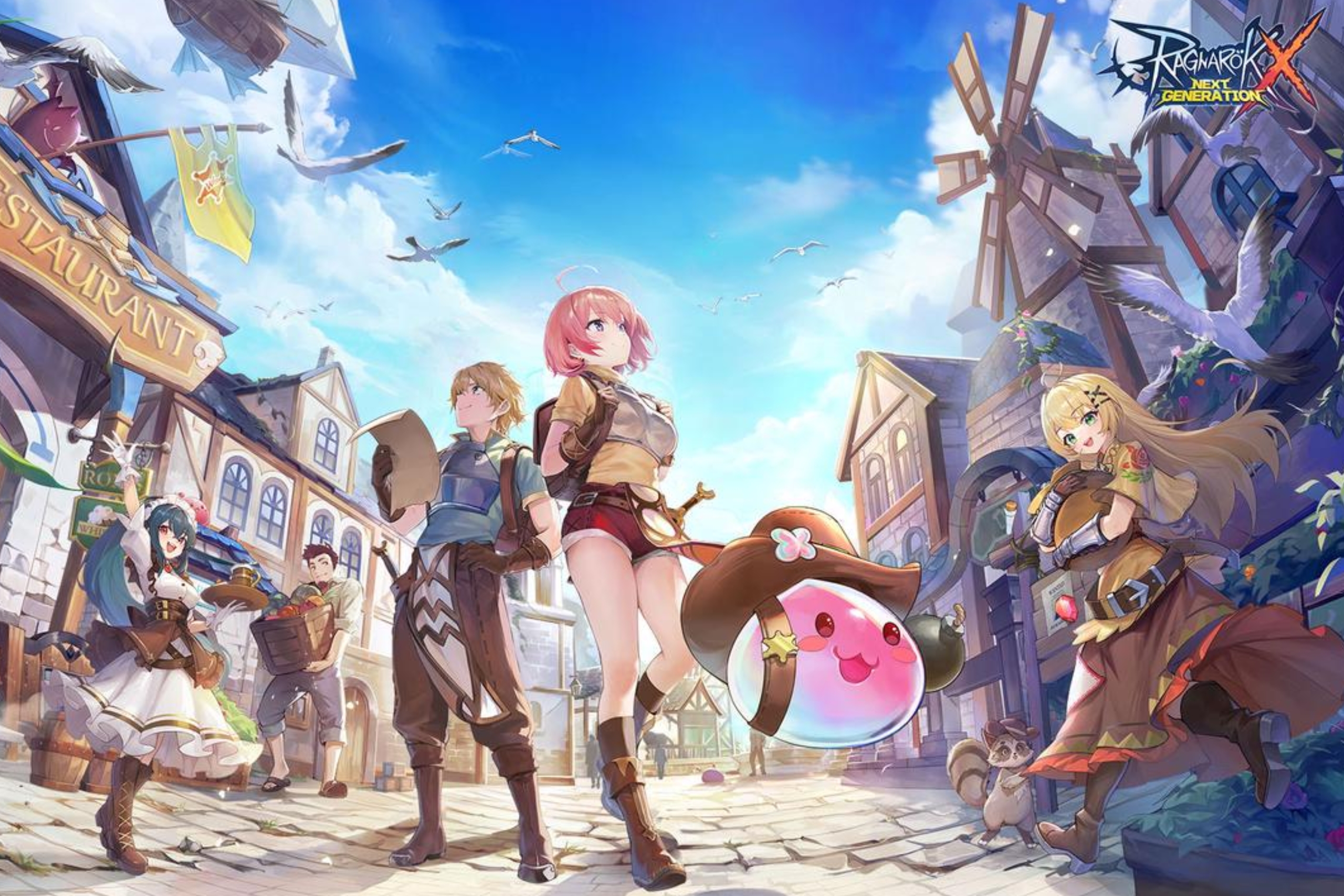
Ragnarok X: Next Generation Explored — Gameplay, Expectations, Challenges, And How It Compares To Other Versions
Ragnarok Online has one of the most enduring and most passionately loyal fanbases in the history of online gaming — a community that has followed the franchise across multiple platforms, regional versions, and technological generations since the original game launched in South Korea in 2002. Ragnarok X: Next Generation, developed by Gravity and published through various regional partners for mobile platforms, represents the most ambitious attempt yet to bring the beloved world of Midgard to a new generation of players while preserving the core identity that made the original so unforgettable. For veteran players approaching it with years of accumulated knowledge of earlier versions, and for newcomers encountering the world of Ragnarok for the first time through this entry point, understanding what the game actually is — what it does well, where it challenges expectations, how it differs structurally from its predecessors, and what a new player genuinely needs to know to enjoy it fully — is the essential preparation that transforms a confusing initial experience into a genuinely rewarding one. This guide covers all of it.
What Is Ragnarok X: Next Generation and Where It Sits in the Franchise
Ragnarok X: Next Generation launched globally in 2021 after a successful initial release in Southeast Asian markets — and its arrival was met with a combination of genuine excitement from the franchise’s long-standing community and cautious scrutiny from players who had watched previous mobile adaptations of beloved PC games fail to honor what made the originals worth loving. Understanding where Ragnarok X sits within the broader franchise history provides the context necessary to evaluate what it is trying to achieve and how well it succeeds on its own terms.
The original Ragnarok Online — a two-dimensional massively multiplayer role-playing game released by Gravity and built around the manga source material of Lee Myung-jin — established the franchise’s core identity through a combination of deeply engaging class progression systems, a rich world mythology drawn from Norse legend, a vibrant player-driven economy, and a social culture that made guilds and player communities central to the game’s appeal. That original version spawned dozens of regional adaptations, private server communities, and sequel titles across PC and mobile platforms over the following two decades — each attempting to capture different aspects of the original while adapting to evolving gaming technology and player expectations.
Ragnarok X represents the most technically sophisticated attempt in this lineage — built on a three-dimensional engine that preserves the visual aesthetic of the original in a fully realized three-dimensional environment, maintaining the sprite-based character designs and iconic monster roster that define the franchise’s visual identity while adding the movement freedom, camera control, and environmental depth that modern mobile gaming expects. The game is positioned as a love letter to the original Ragnarok Online experience for players who grew up with the PC version — incorporating the classic job class system, the familiar maps and dungeons, and the signature music themes that trigger immediate nostalgic recognition in long-term fans — while simultaneously functioning as an accessible entry point for mobile-first players who have no prior Ragnarok experience. This dual positioning is both the game’s greatest strength and its most persistent design tension.
Core Gameplay Mechanics and What New Players Need to Know
For players approaching Ragnarok X for the first time, the core gameplay loop involves the interconnected activities of character progression through the job class system, combat across the game’s monster-populated maps and dungeons, equipment acquisition and refinement, and participation in the social and competitive systems that give the multiplayer dimension of the game its long-term engagement value. Understanding how these elements connect and reinforce each other is the foundation of an effective and enjoyable early game experience.
Character creation begins with the choice of a base class — the six original options of Swordsman, Mage, Archer, Merchant, Thief, and Acolyte that veteran Ragnarok players will recognize immediately. Each base class advances through a first job promotion at a defined experience level and then a second job promotion at a higher level, with each promotion unlocking significantly more powerful skills, expanded stat allocation options, and the aesthetic transformation that the franchise has always used as a visible milestone of progression. The second job class system — with its branching paths that offer two second job options for most base classes — is one of the most beloved aspects of the original Ragnarok Online and one that Ragnarok X preserves with considerable fidelity, including the distinctive identities that make each class genuinely different in playstyle rather than cosmetically varied versions of the same combat approach.
The stamina system is the mechanic that most immediately distinguishes Ragnarok X from the original PC game and that most consistently requires adjustment from players whose expectations were formed by the unlimited play sessions of the original. In Ragnarok X, active combat experience and item drop rates are tied to a daily stamina allowance — a limited currency that depletes as the player engages in standard grinding activities and that resets on a daily schedule. When stamina is fully depleted, the efficiency of further grinding drops significantly — creating a daily play rhythm that rewards focused, efficient use of the stamina window and that structures the game around consistent daily engagement rather than the marathon grinding sessions that the original PC version famously enabled. This system is a deliberate design choice rather than a technical limitation — it moderates the pace of progression to create a longer, more sustained engagement arc — but it is the adjustment that most significantly shapes how the game feels relative to the original.
Expectations Versus Reality: What Veterans and Newcomers Actually Encounter
The gap between expectation and reality in Ragnarok X is widest for veteran players of the original Ragnarok Online — players who arrive with deeply specific memories of how the game felt, how progression worked, and what the social experience involved, and who measure the mobile version against those memories with an intimacy that newcomers do not bring to the comparison. Managing this gap honestly is the most useful service any honest guide to the game can provide.
The visual and audio experience of Ragnarok X consistently exceeds expectations for both demographics. The three-dimensional reimagining of Prontera, Payon, Geffen, and the other iconic towns and field maps of the Ragnarok world is executed with genuine care — preserving the scale, layout, and aesthetic character of the originals while adding a visual richness and environmental detail that the two-dimensional original could only suggest rather than fully realize. The musical score, built around the beloved original compositions that are among the most recognizable in online gaming history, delivers immediate emotional resonance for long-term fans and establishes atmospheric depth for newcomers encountering the world for the first time. The monster roster — Porings, Lunatics, Creamy Butterflies, and the hundreds of other iconic creatures that populate Midgard — is rendered with affectionate accuracy that signals the developers’ genuine respect for the source material they are working with.
Where expectations most commonly diverge from reality for veteran players is in the social and economic dimensions of the game — the player-driven economy, the guild dynamics, and the open-world social culture that made the original Ragnarok Online feel genuinely alive and player-authored rather than developer-directed. Ragnarok X provides these systems, but their expression is inevitably shaped by the mobile gaming context in which they operate — the Kafra Exchange as the player market, the party and guild mechanics, and the social gathering points of major towns all exist and function, but within a framework that is more structured and more guided than the emergent, organic social ecosystem of the original. Players who arrive expecting a mobile recreation of that exact original social experience will find something that resembles it in form but differs in texture — which is either a reasonable concession to the realities of mobile gaming or a meaningful loss of the original’s most distinctive quality, depending on the individual player’s priorities.
The Challenges That Define the Ragnarok X Experience
Every game of depth has its challenges — the friction points that test commitment, reward patience, and separate players who engage seriously from those who sample and move on. Ragnarok X has a specific set of challenges that are worth understanding clearly before investment of significant time begins, because they affect the experience in ways that determine whether the game’s genuine rewards can actually be reached.
The gacha and monetization mechanics represent the most significant challenge for players who approach Ragnarok X with expectations of a free-to-play experience that is genuinely competitive without financial investment. Like most mobile online role-playing games targeting the Southeast Asian and global market, Ragnarok X incorporates a range of premium currency systems, limited-time cosmetic and enhancement item offers, and progression-accelerating purchases that create a meaningful difference in the speed and ceiling of advancement between free-to-play and paying players. This is not a uniquely Ragnarok X problem — it is the structural reality of the mobile free-to-play market that the game operates in — but it is a reality that players need to factor honestly into their engagement expectations. The game is playable and genuinely enjoyable at the free-to-play level for players who are patient with the progression pace and who focus on the social and cooperative dimensions of the experience rather than competing directly with heavily invested players at the performance ceiling.
The social requirement is both a challenge and a reward — and its dual nature is worth acknowledging explicitly. Ragnarok X, like the original it draws from, is fundamentally a social game whose most meaningful content — the War of Emperium guild siege system, the high-tier raid and dungeon content, the player economy interactions — is accessible only through consistent engagement with a community of other players. Solo play is viable for early and mid-game progression, but players who resist the social dimension of the game will hit a ceiling beyond which the experience becomes significantly less rich and less rewarding. Finding and committing to an active, welcoming guild early in the experience — rather than attempting to progress through the game in isolation before seeking social connection — is the advice that the design of the game most consistently rewards and that guides to the original Ragnarok Online have offered for two decades.
How Ragnarok X Differs From Other Versions in the Franchise
The Ragnarok franchise encompasses a wide range of games beyond the original PC version and Ragnarok X — including Ragnarok Online 2, Ragnarok M: Eternal Love, Ragnarok: Labyrinth, and various regional server variants of the original — and understanding where Ragnarok X sits in relation to these alternatives helps players who are familiar with other versions contextualize what is distinctive and what is shared across the family of games bearing the franchise name.
The most meaningful comparison is between Ragnarok X and Ragnarok M: Eternal Love — the earlier mobile adaptation that launched in 2017 and that established many of the template choices that Ragnarok X later built upon. Both games are three-dimensional mobile adaptations of the original Ragnarok Online experience targeting the same demographic of nostalgic veteran fans and mobile-first newcomers, and both incorporate the job class system, the iconic maps, and the core social mechanics of the original. The most significant difference between them is visual and technical — Ragnarok X uses a more sophisticated three-dimensional engine with higher polygon character models and more detailed environmental rendering, giving it a visual richness that Ragnarok M’s slightly earlier technology does not match. Content depth and the maturity of the live service operation differ as well — Ragnarok M’s longer operational history means its content library, server stability, and community size are more established, while Ragnarok X benefits from more modern design sensibilities that reflect lessons learned from both Ragnarok M’s successes and its criticisms.
The original Ragnarok Online — still maintained on official servers and actively played on a thriving ecosystem of private servers — remains the benchmark against which every subsequent version is measured by the franchise’s most dedicated community. Its two-dimensional visual presentation, unrestricted grinding mechanics, player-driven economy, and the specific social culture of its guild and competitive systems represent a design philosophy that no mobile adaptation has fully replicated — and many argue that the constraints of mobile gaming make full replication structurally impossible rather than merely technically unachieved. Ragnarok X is best understood not as a replacement for the original experience but as the most successful translation yet of the original’s spirit into a format accessible to the modern mobile gaming audience — preserving enough of what made the original beloved to satisfy veteran nostalgia while adapting enough of its structure to function as a genuinely competitive mobile product in the online games market of the 2020s.
Conclusion
Ragnarok X: Next Generation is a game of genuine quality, genuine ambition, and genuine limitations — and engaging with it honestly on all three terms is what allows its real rewards to be accessed and appreciated. The visual and audio fidelity to the franchise’s most beloved elements, the depth of the job class and progression system, the social richness available to players who commit to its guild and community structures, and the emotional resonance that the world of Midgard delivers to anyone with memories of the original all represent the game at its best. The stamina system, the monetization reality of the mobile free-to-play format, and the differences between its social texture and the emergent community culture of the original represent the honest limitations that players benefit from understanding before they begin rather than discovering through frustrated expectation. For both returning veterans rediscovering a beloved world and newcomers encountering the world of Ragnarok for the very first time, Ragnarok X offers an experience that is — at its most fully engaged and most honestly approached — one of the most richly developed and most affectionately crafted mobile online role-playing games available today.